Why miniatures are a special case
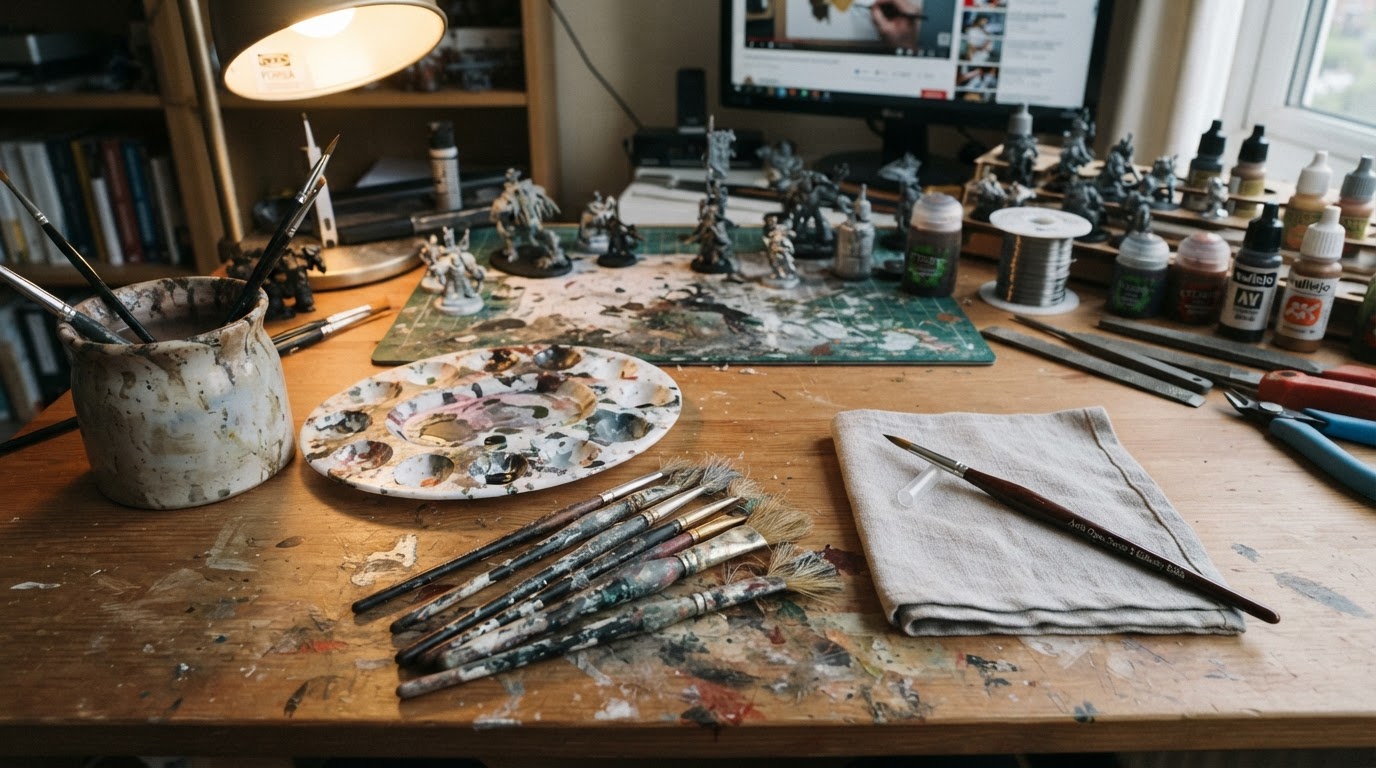
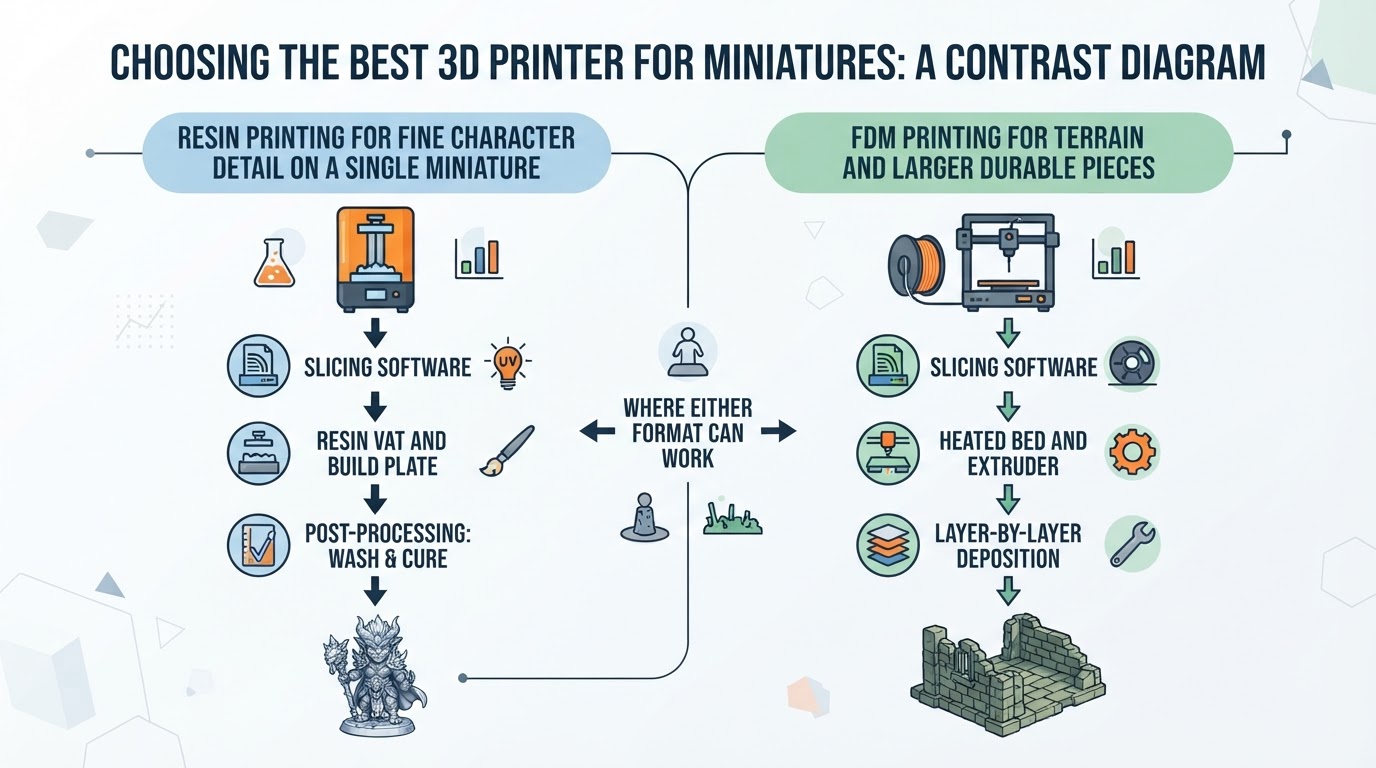
Miniatures are small, detailed objects you'll spend far longer painting than printing. That single fact decides most of the shopping. Resin printers reproduce fine features — faces, fingers, straps, thin weapons — far more reliably than filament machines, which is why every model in this guide is a resin printer.
If your plans are mostly terrain, bases, and big chunky props, a filament (FDM) printer is usually the better buy. Resin is messier, slower per batch, and it needs ventilation and gloves. Pick the format first. Then pick the machine.
The six checks that decide a miniatures printer
1. Detail and resolution
Manufacturers advertise micron layer heights and screen megapixels, but the number that matters is how a small face comes out at 28 mm scale. Find real print photos, not renders, showing eyes, fingers, and thin weapons. Confirm the resolution figures on the current listing for the exact revision you're buying: screens get upgraded mid-generation, and a two-year-old review may describe different hardware.
2. Build volume
The plate decides how many models finish in one run and how long you wait between batches. Compare the plate footprint and height in millimeters against your actual projects: a squad of infantry, a single large monster, or a full cavalry unit. Bigger plates save evenings, especially when a whole army is waiting. Smaller plates are cheaper, easier to store, and quicker to clean.
3. Beginner fit
Check how much assembly is required, whether leveling is automatic, how well the slicer workflow is documented, and how many tutorials exist for that exact model. Most hobby gear gets abandoned in the first month, so a large, active community is often worth more than a slightly better spec sheet. If you have never handled resin, factor in the learning curve for washing, curing, and safe disposal.
4. Ecosystem and support
Ask what happens when the release film tears or the screen dies. Confirm that replacement film, vats, and screens are stocked in your country at a reasonable price, that your preferred resin is compatible, and that community slicer profiles exist. Check the warranty process too. Printers are heavy, and cross-border returns are miserable.
5. Running costs
The printer is only part of the bill. Budget for resin by the liter, isopropyl alcohol, nitrile gloves, paper filters, spare film, and electricity. To compare machines honestly, estimate cost per miniature: resin cost per liter divided by the number of models you get from it. Add a wash-and-cure station if one isn't in the box, and include that in the comparison.
6. Safety and space
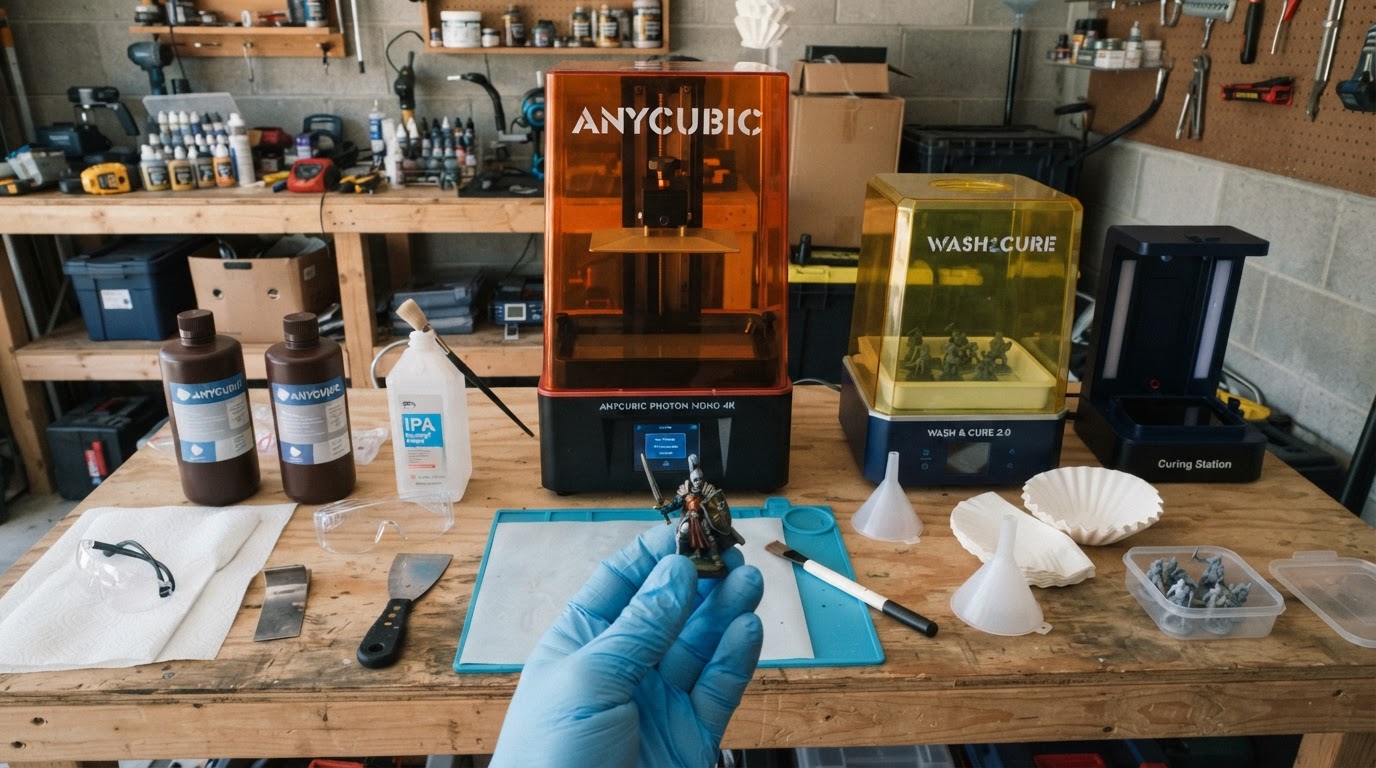
Resin needs ventilation, a stable room temperature, and a surface you're willing to keep messy. Uncured resin irritates skin and eyes, and washing uses alcohol, so plan for gloves, eye protection, and safe storage before the machine arrives. In a small apartment without a balcony or garage, this check can outweigh every spec.
The four options worth shortlisting
These four machines cover the main shapes of a first resin purchase: compact and tidy, large-format, detail-first, and budget-first. None is a universal winner, and prices and bundles change constantly, so treat the verdicts below as a shortlist to verify rather than a final ranking.
Model | Best for | Verify before buying |
|---|---|---|
Elegoo Mars 5 Ultra | A compact first setup for single miniatures and small squads | Plate size, layer-height range, whether wash and cure are included |
Elegoo Saturn 4 Ultra | Bigger batches and the occasional large piece | Plate dimensions, resin tank volume, bench space |
Creality HALOT-MAGE S | Detail-first buyers who want a mid-size machine | Exact revision, native resolution, film and screen prices |
Anycubic Photon M3 | The lowest-risk entry into resin printing | Model generation, spares availability, community profiles |
Elegoo Mars 5 Ultra
Best for: a first resin printer when your projects are single characters and small warbands. Check the plate dimensions against the units you actually field.
The Elegoo Mars 5 Ultra belongs to Elegoo's compact Mars resin family. It's the machine to shortlist if you want the whole workflow — printer, wash, cure — to fit on one small bench without a dedicated hobby room, and if you would rather start with smaller resin bottles.
Trade-off to accept: a compact plate means fewer models per run and more batch cycles when an army project lands.
Verify before buying: plate size, layer-height range, whether a wash-and-cure station is included, and the price of replacement film.
Elegoo Saturn 4 Ultra
Best for: larger batches and the occasional big piece. This is the pick if your shelf of unpainted models keeps growing faster than you can print.
The Elegoo Saturn 4 Ultra belongs to Elegoo's larger-format Saturn resin family, built for bigger batches and larger pieces. A larger plate means fewer evenings lost to re-printing, and it leaves room for monsters, cavalry, and display-scale sculpts that a compact machine cannot fit in one piece.
Trade-off to accept: a bigger printer needs a bigger, well-ventilated bench, more resin in the tank per print, and a wash-and-cure setup that matches its largest output.
Verify before buying: exact plate dimensions, whether your wash-and-cure station fits the largest prints, tank capacity, and how leveling is handled.
Creality HALOT-MAGE S
Best for: buyers who put detail first and want a mid-size machine from a brand with parts everywhere.
The Creality HALOT-MAGE S comes from one of the largest names in hobby 3D printing, which makes parts, resin, and community support easier to find. That matters more than any single spec. The machine you can repair on a Tuesday evening beats the one with the better brochure.
Trade-off to accept: mid-size machines rarely win on price, and Creality refreshes its range often, so the specific revision you're buying matters.
Verify before buying: which revision is actually in stock, native resolution, slicer support, and the cost of replacement film and screens.
Anycubic Photon M3
Best for: the smallest sensible entry ticket into resin printing, where the printer is a way to learn rather than a forever machine.
The Anycubic Photon M3 sits in Anycubic's long-running Photon entry-level resin line. Starting here usually means a lower purchase price, which leaves more of the budget for the things beginners forget: resin, alcohol, gloves, filters, and a cure station.
Trade-off to accept: entry machines often lag the newest screen technology, so check the generation rather than assuming the name is current.
Verify before buying: the exact generation, whether spares are still stocked, community profiles, and the real total price once wash and cure are added.
How to choose without wasting a month
- Count before you shop. Write down how many models a typical project needs and the largest single piece. That decides plate size and batch count, not the spec sheet.
- Pick the room first. You need ventilation, stable temperature, a non-carpet surface, and storage for resin and alcohol out of reach of kids and pets.
- Price the whole setup. Printer, resin, isopropyl alcohol, gloves, filters, spare film, wash-and-cure, and power.
- Check the boring parts. Replacement film, screens, vats, and whether support answers questions in your country.
- Buy where returns are easy. Print one test miniature and judge it at the scale you'll paint, not on a screen.
- Finish line: don't order until you can write down the plate size, the cost per liter of resin, and where the machine will live.
Where this guide comes from
Disclosure: This article is published by Tactile Hobby, which earns affiliate commissions when readers buy gear through some of its links, so please be aware of the potential conflict of interest.
Tactile Hobby's buying guides follow a shortlist rule: one clear pick per category with the reasoning behind it, instead of a dump of every option on the market. The same coverage includes 3D printers for tabletop gaming, paint sets, and brushes.
First screen of the 3D Printers blog category (https://tactilehobby.com/category/3d-printers/): '3D Printers' heading with article listing of 3D-printing guide posts.
That's the standard to demand from any roundup, including this one: a short list, the trade-offs spelled out, and instructions for what to check yourself before spending money.
Last reviewed: September 19, 2026.