What Artis Opus brushes are, in one minute
Artis Opus is a miniature-painting brush brand with a deliberately narrow range rather than a full catalog. Two product families do most of the work. Series S covers fine pointed brushes made with Kolinsky sable hair, aimed at detail work, edge highlights and faces. Series D covers drybrushes, with wider, stiffer heads built for the load-wipe-drag cycle that destroys an ordinary brush.
The rest of the range is mostly combinations of those two ideas. Bundles and boxed sets mix sizes, and the exact contents change between releases, so treat the brand's own product page as the source of truth rather than a review from two years ago. If you are shopping for the first time, the useful mental model is simple: this is a maker for people who already take miniature painting seriously, not a starter kit company.
That distinction matters because the appeal is narrow and specific. A premium brush is not a magic upgrade that fixes technique. What it does is hold a sharp point for longer and let you paint fine detail without fighting the tip every few minutes. If your current brushes already do that, you have nothing to solve.
Who they suit, and who should wait
They suit three kinds of buyers well.
- Painters with a routine. If you sit down to paint most weeks, a brush that keeps its point across a whole project is worth real money, because a failing tip costs you time and repairs.
- People whose brushes die at the point. If your synthetics fray, hook or split after a few sessions, that is the exact problem premium hair is designed to solve.
- Gift buyers who know the recipient paints. A specific, well-known brush is a better gift than a generic set, as long as you know the sizes they actually reach for.
They are a bad first purchase for anyone still in their first few months, and that is not a knock on the brand. New painters press too hard, load too much paint, and leave brushes standing in the water pot. Those habits kill an expensive brush faster than a cheap one, because you notice the loss more. Learn on synthetics, then upgrade the brush that keeps failing rather than the whole desk.
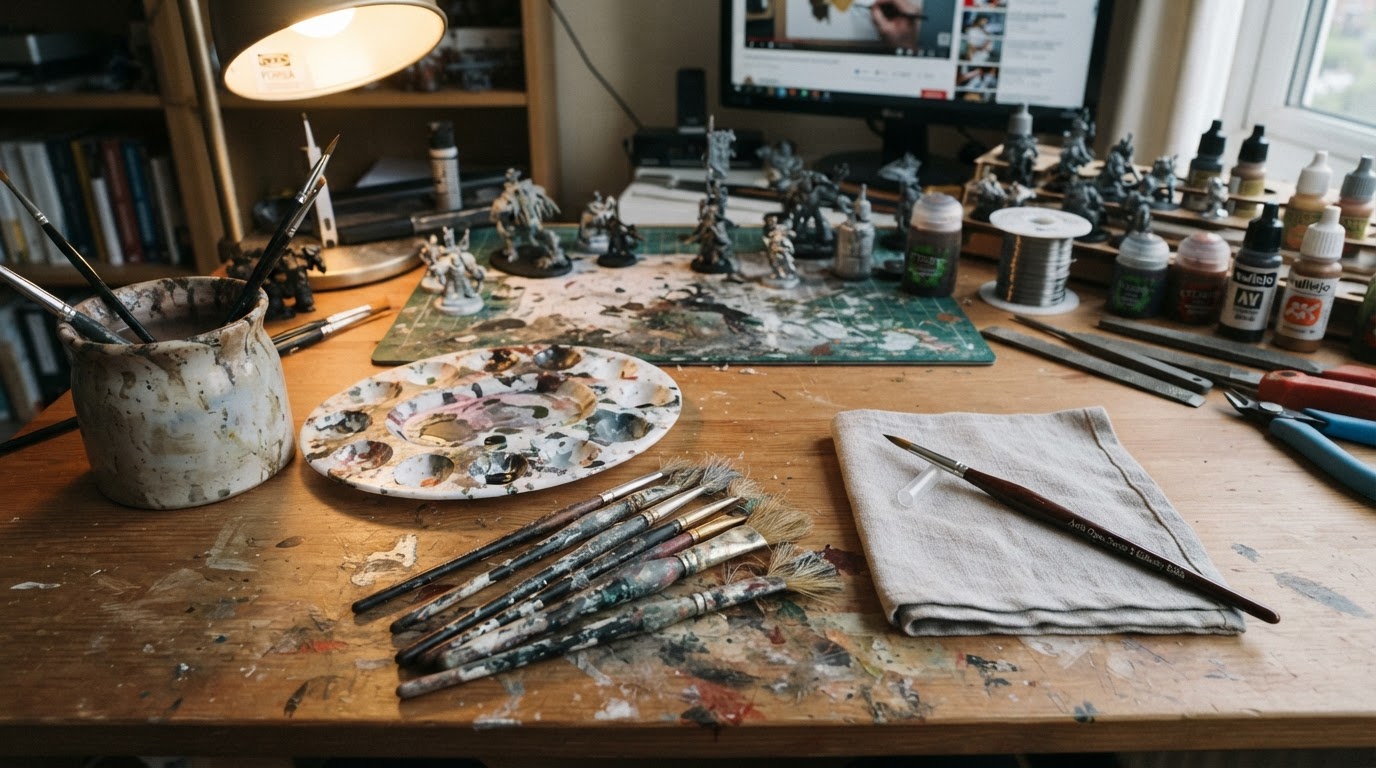
The honest version of the pitch is this: a good brush makes fine work easier, then gets out of the way. It does not make you better at choosing colors, thinning paint, or planning a scheme. Those are separate skills, and no brush buys them.
Are they worth it? A three-question test
Before you spend premium money, answer three questions honestly.
- Can you keep a point on the brushes you already own? If your tips curl because they sit bristles-down in a water pot overnight, the problem is the habit, not the hair. Fix that first, and your current brushes will improve immediately.
- How often do you actually paint? Weekly sessions and a project on the go justify the cost. A brush you pick up four times a year is a decoration.
- What exactly is failing? If the answer is "the tip stops holding a point", premium brushes speak to that. If the answer is "my paint dries on the palette" or "I can't get smooth coverage", a new brush changes nothing.
If you pass all three, the sensible move is still modest. Buy one mid-size round and use it for a month. If it changes how you paint, add the drybrush next. If it doesn't, you have lost the price of a single brush, not the price of a set, and you have learned something real about how you work.
One warning about shopping: prices, set contents and stock move constantly. Cost per brush, not the headline number, is the figure that matters. A set only saves money if you will use every brush inside it, and most painters never do.
Sizing: how many brushes you actually need
Small numbers on brushes are less precise than they look. The size refers to the belly and the point, and every maker draws its own lines, so a well-formed size 2 from a serious brand can carry a finer tip than a cheap size 0. That is why the useful question is not "which numbers are best" but "which jobs do I have".
Most miniature painting breaks down into four jobs:
- Coverage and basecoat. One mid-size round, usually a 1 or a 2, handles the bulk of a project. This is the brush that does the most work, so this is where money spent on quality shows up first.
- Detail. One small round, a 0 or a 00, for eyes, lenses, straps, script and freehand.
- Texture. One drybrush, sized to the surface. Small for infantry and details, larger for vehicles, terrain and big flat panels.
- Mess. Keep synthetics for metallics, washes, texture paste and anything you would rather not risk on expensive hair.
That is three brushes for a typical beginner-to-intermediate painter, plus the cheap ones already in the drawer. A seven-brush set is not a bargain if four of the sizes never leave the case. Sets exist to make a nice gift and to cover a range of painter preferences, not because any one person needs all of them. If singles are available, buy the size you will actually reach for, then replace it when it dies.
When you compare a set against singles, check what you are really getting. A drybrush and a pointed round are different tools with different heads, and a listing will tell you which family each brush belongs to if you look for it.
Drybrushing: where a dedicated brush earns its place
Drybrushing is the most physically abusive common technique in the hobby. You load the brush, wipe most of the paint off, then drag it across raised texture again and again. That grinding motion mats the hair, frays the tip and drives pigment down toward the ferrule. Do that to a fine sable round and it stops being a detail brush within a few sessions.
A dedicated drybrush is built for exactly that punishment. The head is wider and stiffer, the bristles are more resilient, and the shape suits the technique instead of fighting it. It also costs a fraction of a fine pointed brush, so wrecking one is not a disaster.
The technique itself is worth getting right, because most drybrushing problems are loading problems:
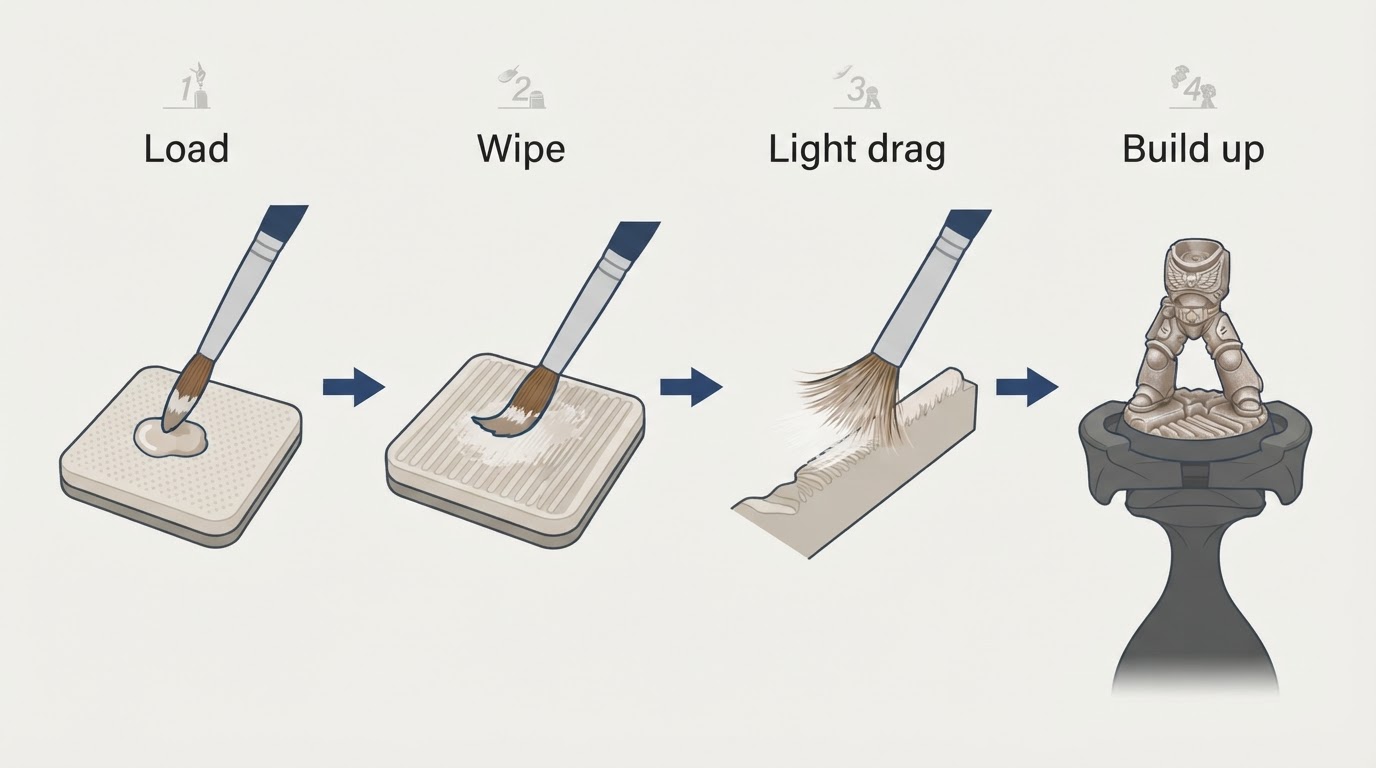
- Start with a completely dry brush. Water makes paint flow into recesses, which is the opposite of what the technique is for.
- Pick up a little paint and wipe almost all of it off on a textured pad, a paper towel or the back of your hand. When the brush stops leaving obvious streaks, it is ready.
- Drag lightly across the raised areas and let the surface texture do the work. Use less pressure than feels natural.
- Build up in two or three passes. Lighter layers that you control beat one heavy coat you have to paint over.
- Clean it at the end of the session. A drybrush tolerates punishment; it does not tolerate dried paint in the roots.
Drybrushing is also the thing this brand is best known for, which makes a drybrush the natural first purchase if you want to try Artis Opus without committing to a fine sable brush.
Care: the habits that decide how long a brush lasts
Brush care is unglamorous and it decides everything. The same brush cared for properly can last years; one left in a water pot can be ruined in a week.
- Never let paint dry near the ferrule. The metal collar is where the hair flexes hardest. Once dried paint locks that section together, the brush stops forming a point and no amount of soap brings it back.
- Never stand a brush bristles-down in water. Capillary action wicks water up into the ferrule, and the tip bends out of shape while it soaks.
- Clean at the end of every session. Rinse, work brush soap into the belly, rinse again in lukewarm water, then reshape the tip with your fingers and let it dry flat or handle-down.
- Skip harsh cleaners. Brush soap is inexpensive and lasts a long time. It is a better habit than dish soap, alcohol or anything that strips the hair.
- Retire, don't resurrect. Once a tip splits or curls, it is finished for detail work. Demote the brush to drybrushing, texture or glue duty, and replace only that one brush.
- Cap it when you travel. Let the brush dry completely first, then protect the point so it does not bend inside a bag.
The habit that saves the most money is boring: buy fewer brushes and take care of them properly.
Alternatives worth comparing, and what to compare
Artis Opus is not the only way to buy a good brush, and you should not treat it as the default. Compare any candidate on the same short list of practical questions:
- Does the maker sell individual brushes, so you can replace one instead of a set?
- Is the hair sable, synthetic or a blend, and does that match the job you have in mind?
- Are the sizes you actually use available, or only the sizes in the bundle?
- What is the cost per brush once shipping and any import charges are included?
- How easy is a return if the brush arrives with a bent tip?
If you want a second name to weigh against this one, Rosemary & Co (Series 33) and Winsor & Newton (Series 7) are the usual starting points for a fine sable round, and both sell individual brushes, so you can test a single size before committing. At the budget end, the synthetic ranges sold by the big hobby paint brands are perfectly serviceable for drybrushing, washes and messy work, and a synthetic set plus brush soap is a legitimate way to spend the first year of the hobby.
One more consideration that rarely makes it into reviews: Kolinsky sable is animal hair, and some painters would rather not buy it. That is a reasonable position, and a well-cared-for synthetic brush is a genuinely good tool. It simply holds a point for less time than sable, which is exactly the trade you are making when you pay premium prices.
The bottom line
Match the purchase to where you are, not to what the shelf suggests.
- First few months: skip premium entirely. A synthetic set and brush soap will teach you more than an expensive brush will.
- Returning with a project on the desk: one mid-size pointed brush and one dedicated drybrush covers most of a small force, and both will earn their keep.
- Buying a gift: a two-brush set or a single mid-size round reads as more considered than a ten-brush box, especially if you know the sizes the recipient uses.
- Already painting with good brushes: replace the individual brush that died. There is no tier above this that changes your results.
Before you check out, run this list:
- Confirm the sizes in the set match brushes you will genuinely use.
- Check whether you are buying a pointed brush or a drybrush; they are not interchangeable.
- Buy singles where you can, and only bundle when the bundle matches your habits.
- Add brush soap if you do not own any. It protects every brush you already have.
- Buy from a seller with straightforward returns. A premium brush you cannot return is an expensive experiment.